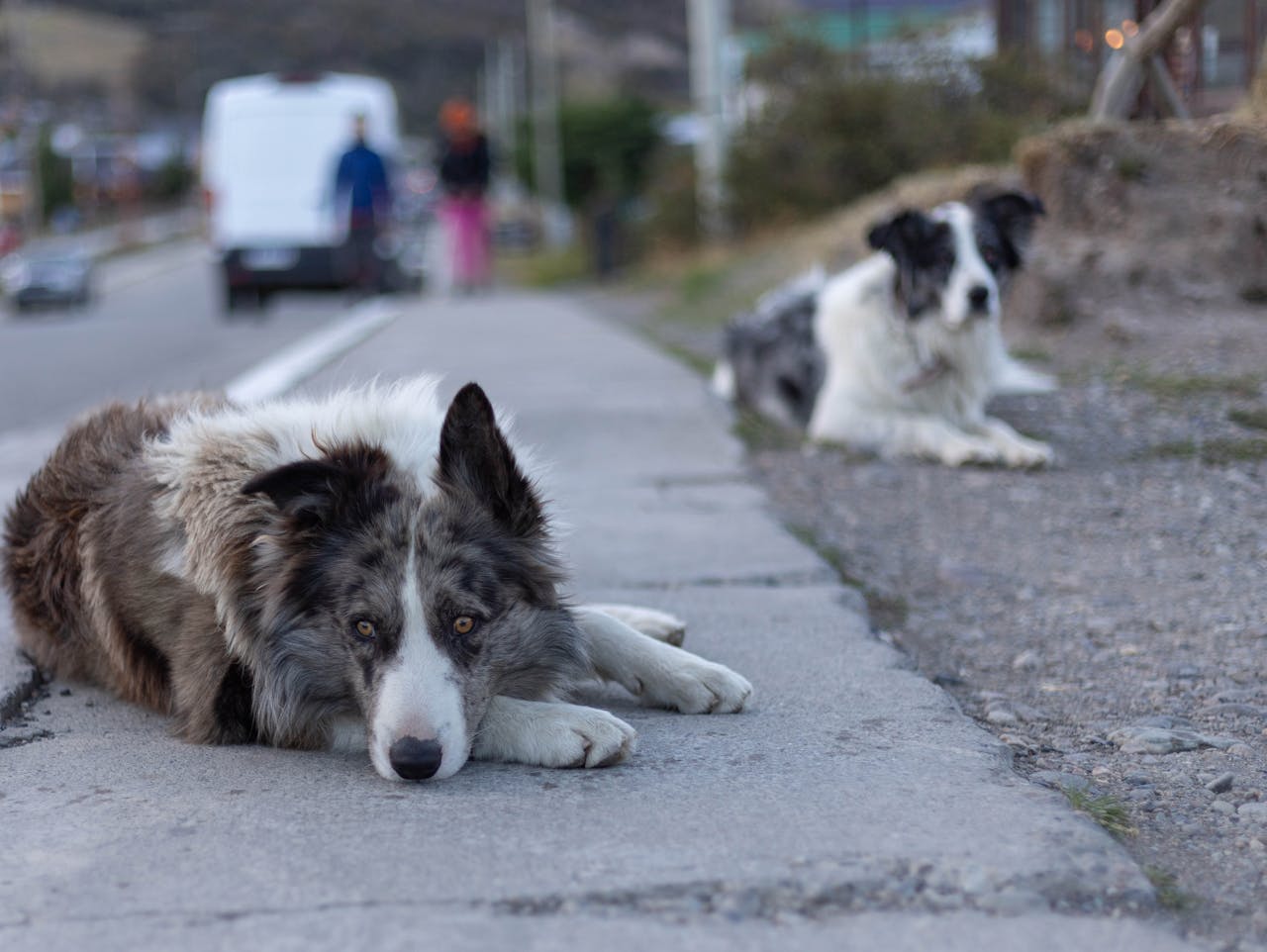
Street Dogs and the Urban Symbiosis
Disclaimer: This article is not intended to dismiss or minimize the very real fear or trauma that some humans experience around street dogs. It explores a deeper perspective on their purpose, awareness, and role in urban life. Fear is real; respect for personal boundaries is necessary. This is a reflection on coexistence, perception, and symbiosis, NOT a dismissal of human experience.
The city hums with human certainty. Concrete, traffic, and artificial lights dominate the senses. Humans walk, blind to the pulse beneath their feet. But the city is never just human. In the margins, street dogs move with purpose, silently defining spaces, monitoring thresholds, and holding invisible lines of protection. They are not mere survivors. They are custodians, sentinels of a deeper rhythm we have long forgotten.
A street dog’s territory is precise. Not random, not chaotic, but measured in instinct and intention. Every corner, alley, and streetlight marks a node of vigilance. To humans, their snarls and sudden movements seem aggressive. In truth, they are warnings, calibrations of balance. They perceive dangers humans cannot—emotional currents, approaching chaos, the subtle shifts in human intent. They act, protect, and regulate, often without recognition, often at great personal risk.
Urban life is harsh and dissonant. Firecrackers explode in fractal frequencies beyond human understanding. Loud engines roar like earthquakes. Bright neon floods blind and confuse. Yet the dogs move through it all with composure, adjusting, recalibrating, maintaining a sacred order that humans cannot perceive.
Humans often misread this order. They call dogs a menace. They recoil from their intelligence, courage, and unspoken guardianship. From high-rise apartments and soundproofed lives, humans assume dominance. They forget that the city’s harmony depends on these unseen custodians, that every street patrolled, every corner marked, every threat assessed, preserves not just the dogs’ lives, but fragments of human safety as well.
Street dogs act as living thresholds. They measure intent, energy, and danger. Their territory is not selfish; it is a protective lattice, encompassing both their own survival and ours. Yet humans, unaware of this subtle symbiosis, trample through their space, confuse signals, provoke fear, and misinterpret vigilance as aggression. We fail to see that the dogs’ higher purpose—guardianship, perception, regulation—is woven into the urban fabric as deeply as our own schedules and traffic lights.
To coexist is not enough. To understand is necessary. The city does not belong solely to humans. Street dogs carry an intelligence we ignore, a presence we underestimate, and a responsibility they perform silently, persistently, without acknowledgment. They act not from fear, but from a higher instinct that intersects dimensions humans barely notice. They are protectors, observers, guides, and mirrors of a truth our urban lives have made invisible: that life is richer, deeper, and infinitely more interconnected than our limited perception allows.
To walk among them is to witness the subtle architecture of awareness. To ignore them is to live half-blind. The city is a shared consciousness. Street dogs do not merely occupy it—they hold it together. And in their quiet, unwavering guardianship, they reveal a reality humans rarely see: that purpose can exist beyond convenience, intelligence can exist beyond language, and protection can flow from awareness far greater than our own.